
What is the right interpreting and technical setup for your event?
Every event requires a different interpreting and technical setup. We can support onsite, hybrid and fully remote events, adapting the interpreting team, equipment, technical support and platform to the way your speakers and attendees will participate.
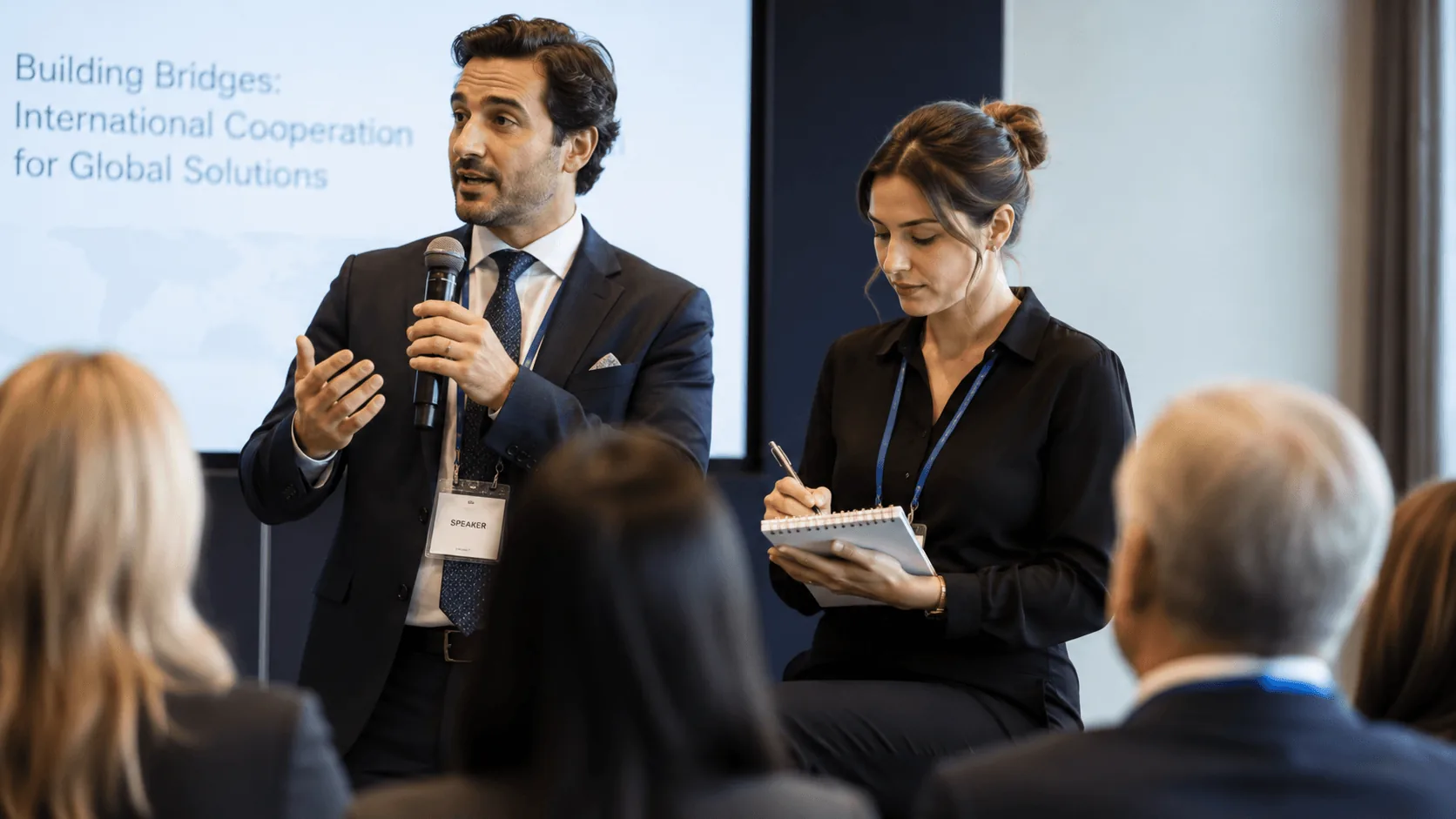
Onsite events
Everyone in the same venue.
For fully onsite events, speakers, attendees and interpreters are all present at the event location.
The setup depends largely on whether you require consecutive or simultaneous interpreting.
For simultaneous interpreting, depending on the venue, event format and number of languages, we can provide the complete technical setup, including interpreting booths, consoles, microphones, receivers and onsite technical support.
For consecutive interpreting, dedicated interpreting equipment and technicians are generally not required: the interpreter works directly in the room, while the speaker pauses at regular intervals for the interpretation. The venue may, of course, still require its own microphones or AV equipment depending on the size and format of the event.
Typical setup:
Simultaneous: Speakers + attendees onsite · Technicians onsite · Interpreters onsite
Consecutive: Speakers + attendees onsite · Interpreters onsite · Normally no dedicated interpreting equipment or technical support required
Hybrid events
Connecting the venue with remote participants.
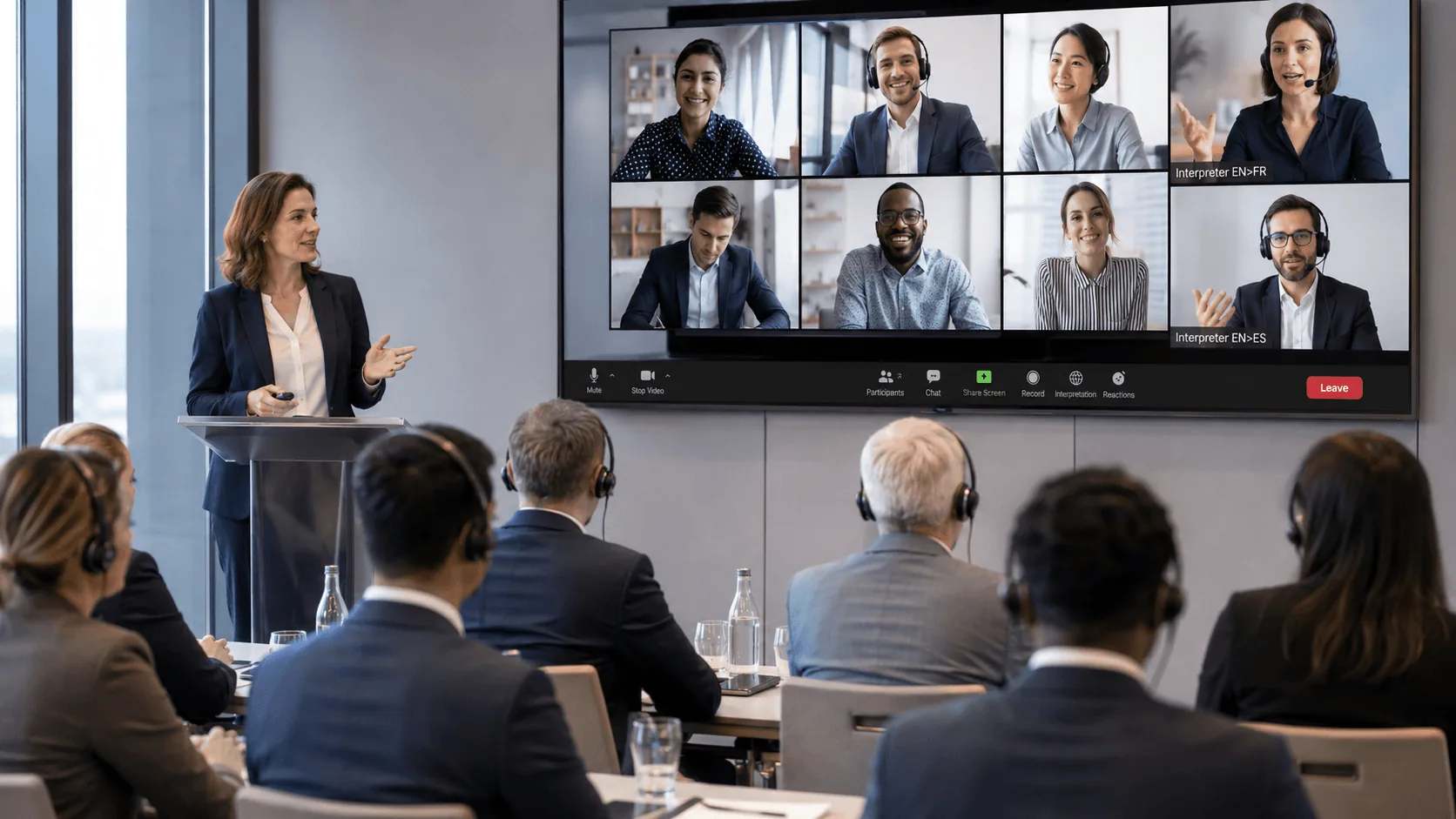
Hybrid events can take many different forms. Some speakers or attendees may be onsite while others join remotely, and the interpreting team can work either from the venue or remotely.
For example, we can provide:
- Technicians and interpreters onsite at the venue, with remote speakers or attendees joining the event online.
- Technicians onsite for AV and web streaming, with interpreters working remotely, either:
- from their own professional setups; or
- from a dedicated interpreting hub — a professional centre equipped with several interpreting booths, each with a screen for following the onsite event, and additional technicians providing a higher level of technical control. We recommend this option where it offers a genuine technical and logistical advantage for the particular event and language combinations required.
We design the workflow around the event rather than forcing the event into a predefined configuration. The objective is to ensure that the onsite venue, online platform and interpreting channels operate as one integrated system.
Possible setup:
Speakers + attendees onsite and online · Technicians onsite and/or at the hub · Interpreters onsite, remote or at a hub
Fully remote events
Speakers, attendees and interpreters connect remotely.
The appropriate setup also depends on whether the event requires consecutive or simultaneous interpreting.
For a short meeting using consecutive interpreting, the interpreter can normally connect directly from their own professional setup, without dedicated interpreting technology or technical support. This makes consecutive interpreting a particularly straightforward option for smaller remote meetings where the format and number of languages make it suitable.
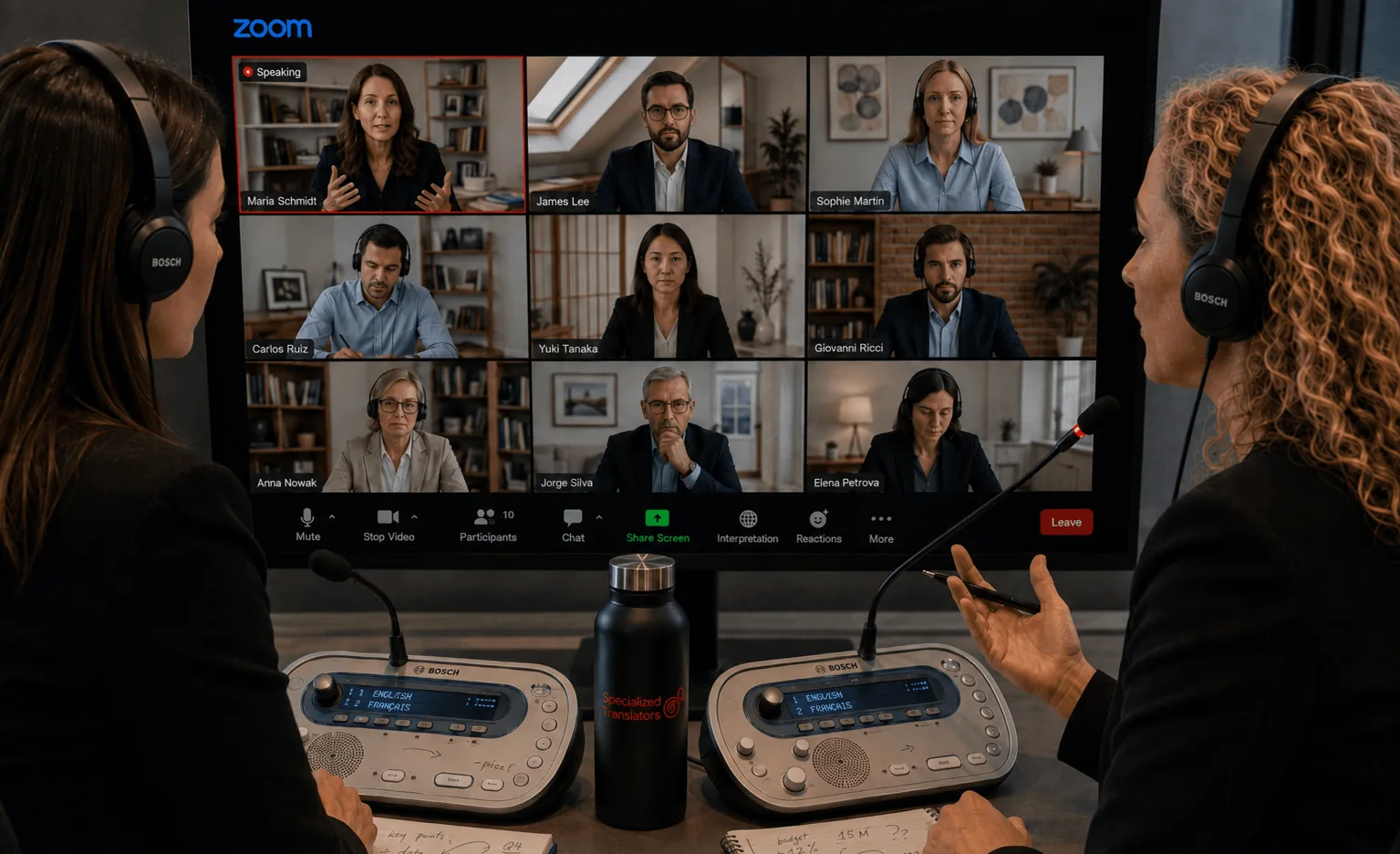
For simultaneous interpreting, we generally recommend Zoom, as it includes dedicated simultaneous interpretation functionality and provides a familiar interface for both participants and interpreters.
Where needed, we can provide the Zoom environment through our professional licence and take care of everything: from creating the meeting or webinar and sending invitations to managing the interpreting channels, recording the event in each language and providing technical support throughout the multilingual meeting.
For simultaneous events, the interpreters can work remotely from their own professional setups or, where it offers a genuine technical and logistical advantage, together from a professional interpreting hub. A hub can provide the technical team with greater control over audio, connectivity, interpreter coordination and troubleshooting, particularly for more complex multilingual events.
However, a hub is not automatically the best solution for every remote event: the most suitable setup also depends on the language combinations required, interpreter availability and the logistics involved. We recommend the configuration that offers the best balance of interpreting quality, technical control, practical efficiency and cost-effectiveness for the client.
Typical setup:
Consecutive: Speakers + attendees remote · Interpreter remote · Normally no dedicated technical support required
Simultaneous: Speakers + attendees remote · Interpreters remote or at a hub · Technical support remote and/or from the hub
Not sure which setup you need?
No worries — advising you on the best possible setup for your event is part of our job. You do not need to define the technical architecture before contacting us.
Just tell us how your speakers and attendees will participate, where the event will take place (if onsite), which languages you need and how the event will be delivered, and we will be glad to recommend the most suitable interpreting and technical setup.