
Simultaneous and consecutive interpreting are the two main solutions for multilingual meetings and events. Neither is universally better. The right choice depends on the format, duration, subject matter, number of participants, venue and schedule. In keeping with our tailor-made approach, Specialized Translators will review your event and recommend the solution that offers the best balance of accuracy, flow, practicality and cost.
What is simultaneous interpreting?
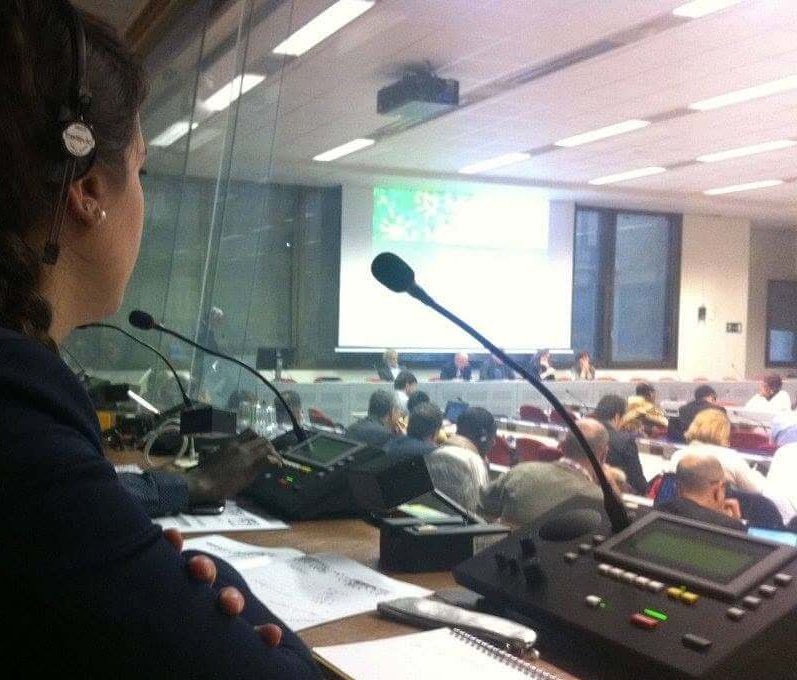
In simultaneous interpreting, the interpreter listens to the speaker through headphones and delivers the message in the other language almost at the same time. Participants hear the interpretation through receivers and headsets, or select the relevant language channel when attending online.
Advantages of simultaneous interpreting
- Normal event pace. Speakers do not need to pause for the interpretation.
- Best for complex events. It is generally the right option for conferences, presentations, training sessions, panels and long or highly technical events.
- Several languages supported. It works well for large audiences and can support several languages at the same time.
- Hardly any delay. Participants can follow the speaker naturally, with a lag of just a couple of seconds.
Limitations and requirements
- Two interpreters required. For simultaneous services lasting more than approximately 30–45 minutes, the interpreters generally alternate every 20–30 minutes while their colleague follows the discussion, assists with terminology and numbers, and is ready to take over.
- Booth and technical support. On site, the setup normally includes one sound-insulated booth for two interpreters, two interpreting consoles, microphones, headsets, receivers and the necessary audio connections.
- Portable interpreting equipment. For tours, study visits, facility inspections and other mobile situations, we can provide two microphones—one for the speakers and one for the interpreters—as well as a transmitter and wireless receivers.
- Complete Zoom package. For online events, we can provide the interpreting function, technical configuration and support, as well as the interpreters.
- Higher overall cost. Simultaneous interpreting requires a team, equipment and technical coordination, so it normally costs more than a short consecutive assignment.
Why do simultaneous interpreters work in teams?
Simultaneous interpreting is an unusually demanding cognitive activity. The interpreter must listen to and understand the incoming message, retain information in working memory, reformulate it in another language, speak, monitor the output and coordinate all these processes at once, usually with only a few seconds between the original and interpreted speech. Working memory and attention are limited-capacity systems, and research shows that increasing cognitive load affects interpreting performance. Experimental evidence has also found measurable mental fatigue and reduced post-task working-memory performance following a continuous simultaneous-interpreting task of about 33 minutes.
Regular handovers, generally every 20–30 minutes, are therefore a quality and risk-management measure, not an optional extra. Alternating helps maintain concentration, accuracy, fluency and terminological consistency throughout the event, particularly when the subject is technical, the delivery is fast, the audio is imperfect or the schedule is intensive.
What is consecutive interpreting?
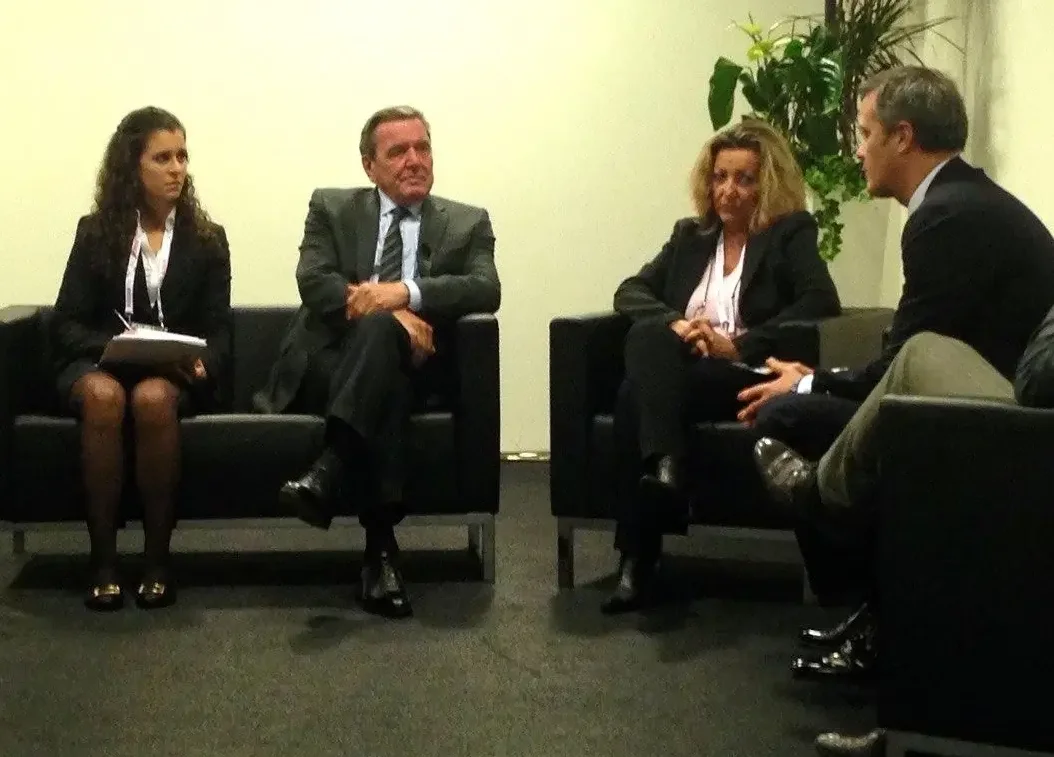
In consecutive interpreting, the speaker talks for a short segment and then pauses while the interpreter renders the message in the other language. For longer segments, the interpreter uses a professional note-taking technique to reconstruct the meaning, structure and key details accurately. A skilled consecutive interpreter can retain and reproduce a long message—even one lasting around 10 minutes—in detail; however, segments of that length are not recommended because they are difficult for the audience to follow.
Advantages of consecutive interpreting
- No dedicated equipment. Generally, only a room microphone is needed when the setting or audience size makes one appropriate.
- One interpreter may suffice. For a non-technical assignment lasting a couple of hours, we will confirm the appropriate staffing after reviewing the agenda, topic, language combination and working conditions.
- Practical for small meetings. Consecutive interpreting can be a cost-effective choice for interviews, negotiations, site discussions, press encounters and short ceremonies.
- Time to reflect. The pauses let participants take notes or formulate a reply.
Limitations
- About twice as long. Each message is delivered first in the source language and then in the target language.
- Interrupted speaker flow. Frequent pauses may feel less natural in presentations or large events.
- Several languages not viable. Consecutive interpreting is not suitable when several target languages are required.
- Technical or long assignments. Highly technical and/or long consecutive assignments are not recommended. Dense terminology, figures and long stretches of speech increase memory and note-taking demands, while a lengthy programme can become impractically long once interpreting time is added. In these situations, simultaneous interpreting is generally the safer and more efficient choice.
Remote simultaneous interpreting
For remote conferences, we can provide the complete Zoom interpreting package: activation and configuration of the interpreting function, professional interpreters and continuous technical support. Participants select their preferred language channel directly on Zoom.
For events requiring greater operational control and consistently high audio quality, we can also provide an optional interpreting hub. The hub gives interpreters a professionally managed environment with suitable equipment, connectivity and on-site technical supervision, while speakers and participants join remotely.
Simultaneous or consecutive: a quick comparison
| Consideration | Simultaneous interpreting | Consecutive interpreting |
|---|---|---|
| Delivery | Almost at the same time as the speaker | After each speaker segment |
| Time | Event keeps its normal pace | About twice as long |
| Staffing | Two interpreters beyond approximately 30–45 minutes | One may cover a couple of non-technical hours, subject to confirmation |
| Best for | Conferences, technical content, large or multilingual audiences | Short, non-technical, small-group exchanges |
| On-site equipment | 1 booth for 2 interpreters, audio equipment and technical support | Usually none, apart from a room microphone where appropriate |
| Mobile setting | Portable interpreting equipment with two microphones and wireless receivers | Possible for small conversational groups |
| Online setting | Zoom interpreting function and complete package + technical support + optional hub for higher control and quality | Standard video-call audio may suit small meetings |
Our recommendation is always event-specific
The format alone does not determine the right solution. Speech density, technical terminology, language direction, audience size, acoustics, travel between locations, recording or streaming, and the availability of reference material can all affect the setup. We will assess these factors and confirm the number of interpreters, equipment and technical support required for your particular event.
Tell us where and when your event will take place, including the languages, participant numbers, schedule and subject matter. We will propose a complete, tailor-made interpreting package.
Scientific references
- Hiltunen, S., Mäntyranta, H., Vik, G.-V. & Kalakoski, V. (2025). “Effect of cognitive load on working memory updating and prose recall skills of interpreters.” International Journal of Bilingualism. https://doi.org/10.1177/13670069241302407
- Koshkin, R., Shtyrov, Y., Myachykov, A. & Ossadtchi, A. (2018). “Testing the efforts model of simultaneous interpreting: An ERP study.” PLOS ONE, 13(10). https://doi.org/10.1371/journal.pone.0206129
- Mellinger, C. D. & Hanson, T. A. (2019). “Meta-analyses of simultaneous interpreting and working memory.” Interpreting. https://doi.org/10.1075/intp.00026.mel
- Seeber, K. G. (2011). “Cognitive load in simultaneous interpreting: Existing theories—new models.” Interpreting, 13(2), 176–204. https://doi.org/10.1075/intp.13.2.02see
- Lorcery, A., André, N., Benraïss, A., Roussel, S., Tricot, A. & Audiffren, M. (2026). “Lost in translation: Mental fatigue induced by simultaneous interpreting impairs working memory and modulates pre-ejection period.” Acta Psychologica, 266, 106909. https://doi.org/10.1016/j.actpsy.2026.106909