Tag: interpreter

  • 3 reasons why Trump-Putin’s interpreter should not be subpoenaed. The interpreters’ perspective

    Lately, interpreters have been all but invisible on the news, especially thanks to US President, Donald Trump. The latest case you may have already heard of regards the secret bilateral meeting between Trump and Putin, with the help of an interpreter. Due to its secrecy, in the US there is currently a significant debate on whether the interpreter and/or her notes should be subpoenaed to shed light on what was said during the event.


    We would like to share today our merely-professional standpoint on the matter providing 3 reasons why the interpreter should not be subpoenaed.


    1. It is against interpreters’ code of ethics to breach confidentiality

    The main pillar of interpreters’ work is the utmost confidentiality of everything that is said during the interpreting service. It is not a coincidence that every interpreting association includes it in its code of ethics. This allows every person involved, whether it is a business man during a commercial talk or a politician attending a high-level bilateral meeting as in this case, to speak freely. Confidentiality is key also in other professions, such as for lawyers, priests, journalists, and many more.


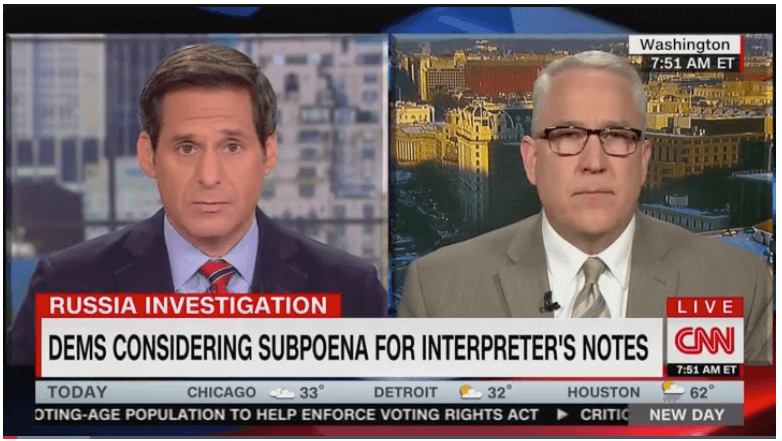
    Interpreters are there just to let the communication flow, not to be used as spies or transcribers nor to judge. They should never be asked to breach confidentiality or, as our colleague Barry Olsen rightly states in an interview with the CNN (see below), there will be serious consequences in the long run for diplomacy and trust in interpreters in general.

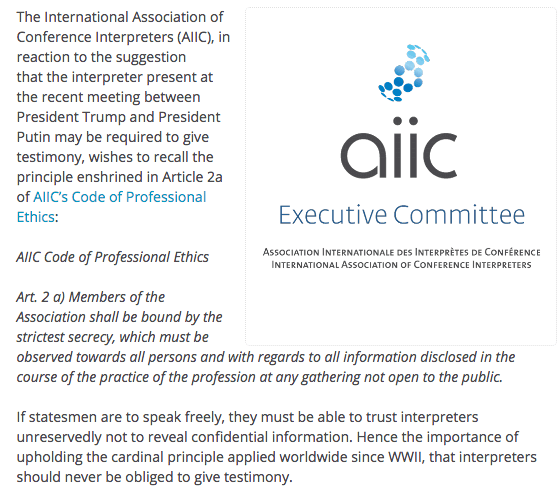
    Below follows the statement issued by AIIC (International Association of Conference Interpreters) on this issue.
     

    2. The interpreter won’t be a reliable witness anyway

    Even if neglecting the consequences of breaching confidentiality, the interpreter won’t be a reliable witness anyway. That is because we interpreters are terrible at remembering with enough precision what we interpreted even shortly before. When we work both consecutively (as in bilateral meetings) and simultaneously (from a booth, talking at the same time as the speaker) we store information in our short-term memory. Once we have interpreted a piece of information, it is quickly and efficiently deleted to make room for more.


    3. Subpoenaing the interpreter’s notes will be completely useless
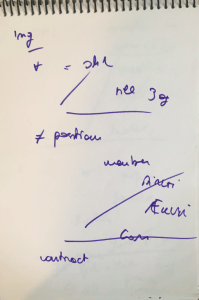
    Example of my interpreting notes, with a good deal of “doctor-style” handwriting.

    In order to be able to accurately convey what has been said during a bilateral meeting of this sort we interpreters take notes, which are more similar to hieroglyphics than what people might understand when hearing the term “notes”.

    As you can understand by looking at the picture of my interpreting notes, not only will it be impossible for whoever subpoenas those notes to decipher them, but the interpreter won’t be able to remember what they meant either. In my case, after months, I have no clue of even which assignment they were taken for.

    As a matter of fact, interpreting notes are not to be confused with shorthand or any other standardized system to transcribe contents accurately. Rather, they are merely a visual and personally-developed mnemonic help with a very quick expiration time (about 15-30 minutes).


    Completely in line with our considerations is the very exhaustive contribution of our colleague, Barry Olsen, who was interviewed by the CNN on this matter. To watch the interview, click on the image below and then scroll down to watch the last video of the page. Enjoy it!
     

    If you want to share your opinion on the matter, add further arguments in favour or against subpoenaing the interpreter, we’ll be glad to read your comments. Thanks in advance!
  • A technical interpreting assignment is only a 800-term glossary away

    A technical interpreting assignment is only a 800-term glossary away

    Last week Specialized Translators provided a four-day Spanish-into-English simultaneous interpreting service during a technical conference on dermatology in Calpe (Alicante, Spain).

    Whoever is familiar with this field is aware of its complexity: when you speak of derma products it’s not just about marketing, you have to deal with complex medical and chemical concepts, together with its terminology.

    This is why time is not your best friend when the client requests the service last minute on a Thursday evening to confirm it on Friday morning and the assignment starts on Monday.


    Preparation is key before each interpreting assignment

    We interpreters need to study before each event. We are not born experts of all fields of human knowledge. Plus, the more technical the assignament is, the more we have to study. As simple as that. And even when you have previous experience on the same topic, each company is a different world in terms of products, active ingredients they use for them and so on.

    In addition, fellow interpreters can confirm that once the assignment is over, your memory needs to get rid of all those terms you had to recall in another language in a matter of a second or less for the previous assignment. This is why unless you interpret each week about the same topic, you need to study again the material you had previously prepared for a related assignment.

    It’s essential that the client understands the importance of providing plently of documentation on what speakers will talk about (mainly the PPTs that are going to be displayed). This is the best way for us interpreters to optimize our preparation before the event and ensure the best performance on the days of the conference.


    La imagen puede contener: una o varias personas e interior


    How we prepared in this case

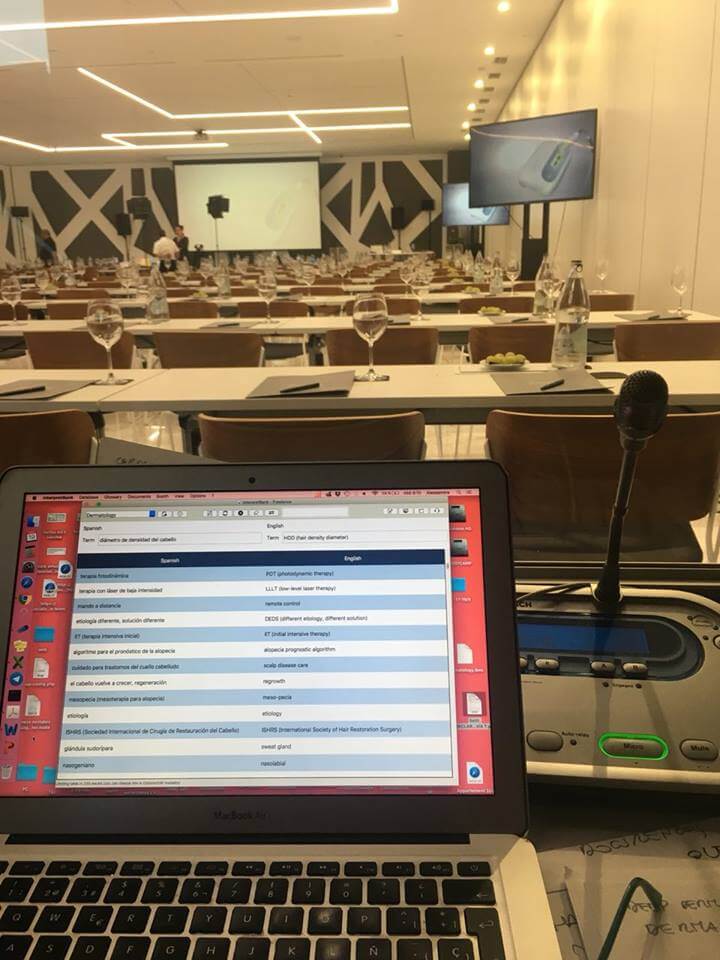
    In this particular case, we couldn’t waste any time waiting for the documents since we weren’t sure if and when we would get them. This is why we spent the entire weekend preparing: we read each and every section of the client’s website, extracted all the technical terms we might need during the conference, included them in a glossary together with the equivalents in the target language, apart from studying all revelant concepts we might have to deal with. By Saturday at 3 pm, our draft glossary had already 450 terms, and that’s when we received the first PPTs from the client. By the end of the process, the glossary reached 800 terms, most of which where active ingredients and long chemical compounds, which were extremely hard to even read (sometimes even by the experts themselves, that was reassuring for us).

    Of course, having 800 terms in written in your glossary is not enough. You need to memorize them so that whenever they come up in the talk, you’ll be able to immediately recall the equivalent term in the target language.


    La imagen puede contener: personas sentadas, pantalla e interior


    When you study hard, there is always a happy ending

    Personally, even though I always get the impression that there is no way my memory can cope with so much terminology in a short amount of time while preparing, when the microphone is on on the big day, the magic simply happens: thanks to the adrenaline of the assignment combined with the long hours of preparation, I somehow manage to find the right term at the right time stored somewhere in my busy brain.[dt_divider style=”thin” /]

    For more pictures of the event, you can check our Facebook page.


  • Spanish interpreting private market at UAM (Madrid)

    Spanish interpreting private market at UAM (Madrid)

    At Specialized Translators, we are all passionate professional translators and interpreter. We love translating and interpreting, but we also love sharing best practices and tips with students to help them the best we can during their training.

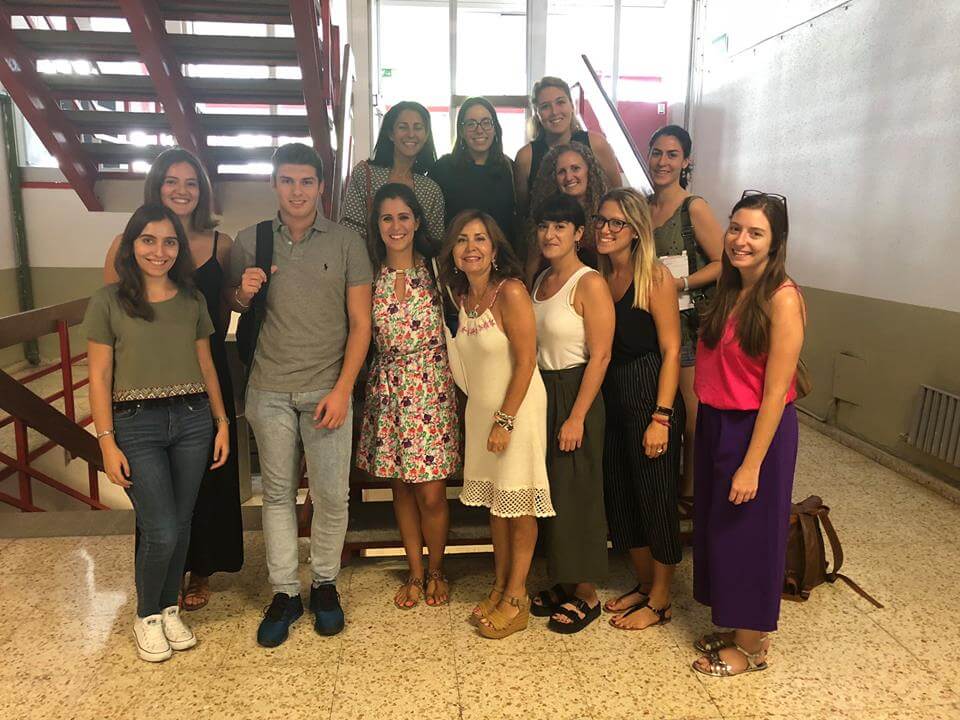
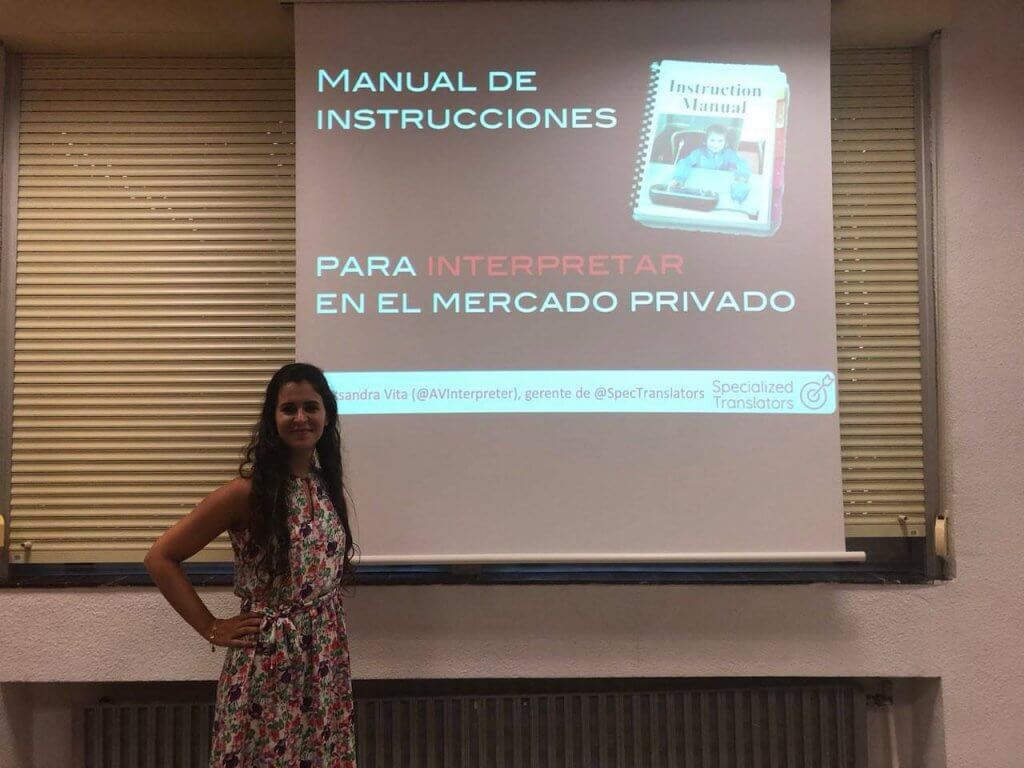
    On Monday, September 24th, Alessandra was kindly invited by a fellow interpreter, Diana Soliverdi, to hold a conference on the Spanish private market. The talk was addressed to students attending the postgraduate interpreting course (Spanish + English + French/Italian) at Universidad Autónoma de Madrid.


    Institutional vs. private market

    Alessandra started by explaining the main differences between the private and the institutional market (mainly focusing on the Spanish booth at EU institutions).

    In the institutional market, you normally work only into your mother tongue and it’s great to have as many passive and exotic languages as possible. To become an EU-accredited interpreter you need to sit for a test, to which you are invited provided that you have an interesting language combination. Generally, unless if you have an exotic language combination, you would only get to work for EU institutions if you are based in that specific city (e.g. Brussels for the EU Commision).

    In the private market, instead, it’s key that you work in both directions, i.e. into your mother tongue as well as into your B language (what we call retour). At least in the Spanish private market, it’s recommendable to have fewer and more demanded working languages (e.g. even just Spanish < > English), which you truly master actively, than a long list of exotic passive languages that you have a scarce domain of (e.g. Latvian, Polish, Croatian, English > Spanish).


    The pros and cons of retour

    In a nutshell, the main difference between the institutional and the private market is the use of retour in the latter. Retour was born in the private market for economic reasons (since it implied needing fewer interpreters and fewer booths). Unlike what people commonly think, interpreting literature shows that retour is not the black sheep and does have positive aspects for interpreters working from their mother tongue into a foreign language: it provides a better verbal, body and cultural understanding; it’s easier whenever there are audio-related issues; it offers better mnemonic performances (you retain in simultaneous interpreting 9 words working A > B, and only 5 words when the direction is B > A); finally, since you’ll probably have fewer ways to convey a message in a foreign language compaired to your mother tongue, you waste less time choosing.


    And much more!

    We also talked about the importance to acquire marketing and business skills to avoid interpreting at home just for ourselves. We went through best practices on how to acquire some experience with common sense, how to find clients, how to have a positive professional relationship with them, to keep on learning and always be humble, to be a good person and booth mate to work with. And, last but not least, we laughed together about some funny anecdotes an interpreter has to deal with.


    Thanks again, Diana, and to all the students for the interest and very active participation. Good luck with your training!